5 Signs It’s Time to Repaint Your Home’s Exterior (and How to Do It Right)
Most homeowners notice something off about their exterior paint long before they do anything about it. A little fading here, some peeling near the trim, a dark streak on the north wall that keeps coming back. It’s easy to assume these things are cosmetic — signs of age, but nothing urgent.
Exterior paint is not just cosmetic. It is the primary barrier between your home’s siding and framing and everything the weather throws at it. When that barrier starts to fail, what looks like a surface issue is often the beginning of a moisture problem — and moisture problems get more expensive the longer they sit.
In the Hudson Valley, the climate makes this especially relevant. Hot summers with high UV exposure, wet springs, and hard freeze-thaw cycles through fall and winter put exterior paint under more stress than the national averages you’ll find on a paint can suggest. The signs of failure here tend to appear earlier and progress faster than homeowners expect.
Here are five signs that tell you it’s time to stop watching and start planning a repaint — what each one looks like, why it happens, and what it means for your home.
Sign #1: Fading or Discolored Paint
Fading is one of the first signs that paint is nearing the end of its useful life. UV exposure breaks down pigment over time, and in the Hudson Valley, hot summers with strong sun accelerate that process — especially on south- and west-facing walls that take the most direct exposure.
Chalking is the next stage. Run a dry hand across your siding. If white or chalky powder comes off, the paint’s binder is breaking down.
What chalking looks like:
- A powdery white residue that transfers to your hand when you touch the siding
- Color that looks dull or washed out even after cleaning
- Uneven surface texture where the paint film has started to deteriorate
- South- and west-facing walls showing it before shaded sides
Chalking is not just a cosmetic issue. That powdery layer prevents new paint from bonding properly, which means surface preparation becomes more involved before the next coat goes on. Fading alone may mean the paint is aging but not yet failing. Chalking means the protective function is ending and a repaint conversation is worth having.
Sign #2: Peeling, Cracking, or Bubbling Surfaces
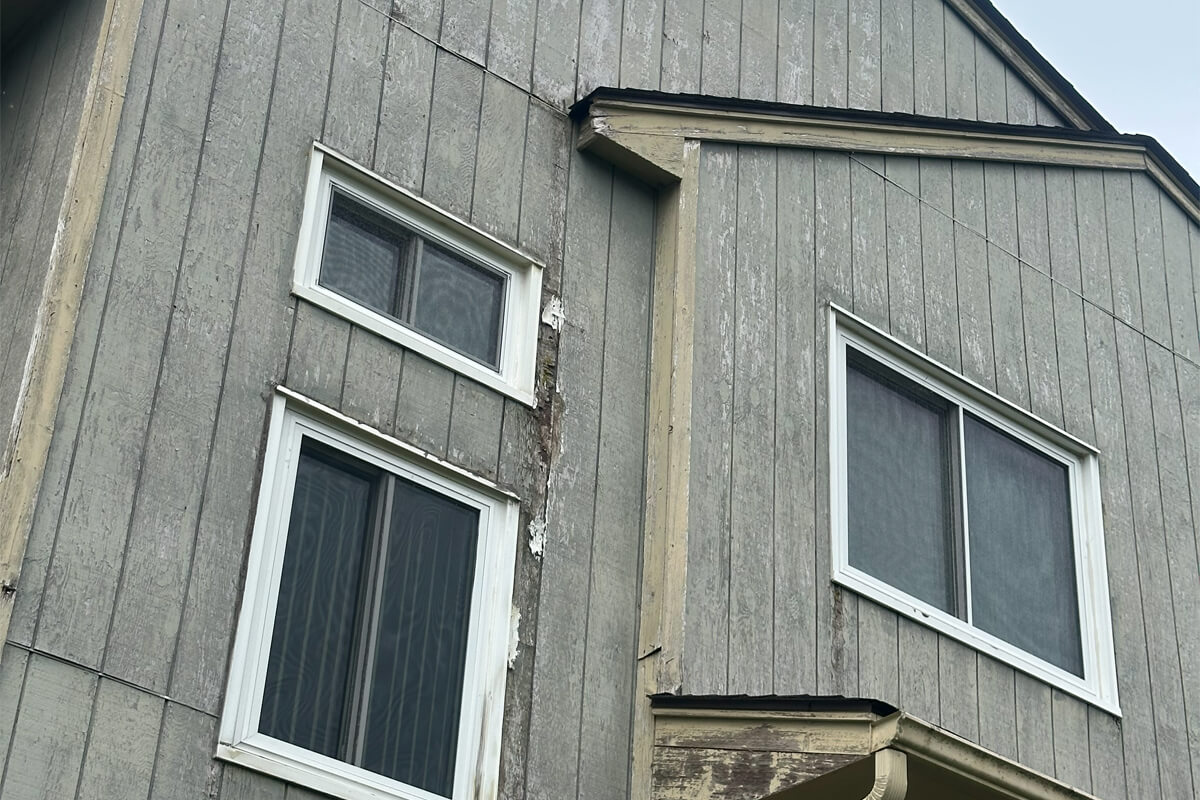
Peeling and cracking are signs that the paint film has lost its bond with the surface beneath it. Moisture trapped behind the paint layer is the most common cause — once water gets behind the film, adhesion fails and the paint begins to lift.
In the Hudson Valley, freeze-thaw cycles make this worse. Water expands when it freezes, forcing paint away from the surface. That process repeats every winter, and the cumulative effect shows up as flaking at joints, corners, and trim edges — anywhere movement is greatest.
Common places peeling and cracking appear first:
- Window frames and door surrounds where caulk has begun to fail
- Corners and trim edges where the paint film is thinnest
- South-facing walls that experience the most daily expansion and contraction
- Areas near gutters or downspouts where water concentration is highest
Peeling in one small area may point to a localized moisture issue worth investigating. Peeling across multiple areas — especially around windows and trim — means the paint system is failing and a full repaint is needed. Painting over peeling surfaces without proper preparation will not fix the problem and will shorten the life of the new coat significantly.
Sign #3: Exposed Wood or Chalking Residue
Dark streaks, green patches, or fuzzy growth in shaded areas are signs of mildew or algae. These are most common on north-facing walls and areas with overhanging trees — both of which are common on wooded properties in Warwick and the surrounding Hudson Valley.
Paint contains mildewcide additives that deplete over time. Once depleted, the surface has no protection against mold spores, and growth returns faster after each cleaning.
Signs the mildewcide is depleted:
- Mildew returns within a season of pressure washing
- Growth appears in new areas, not just the same spots
- Staining is spreading to previously clean sections of siding
- You’re washing more than once a year just to keep it manageable
If you’re pressure washing more than once a year just to keep growth in check, the protective barrier is already gone. Cleaning alone will not solve a depleted paint system. Repainting with a quality exterior paint that includes mildewcide is the correct fix — and proper surface preparation before the new coat goes on is what keeps it from returning.
Sign #4: Mold, Mildew, or Dark Spots
Caulk failure is easy to overlook because it looks like a minor gap rather than a paint problem. But cracked, shrinking, or missing caulk at window frames, door frames, and trim edges means water is entering the wall assembly — even if the paint surface itself still looks fine.
Caulk has a shorter lifespan than paint, typically five to seven years, and freeze-thaw cycles are hard on it. The joint moves constantly through winter as materials expand and contract, and caulk that has lost its flexibility cannot keep up.
What failing caulk looks like:
- Visible cracks or separation at window and door frames
- Caulk that has pulled away from one or both surfaces it was sealing
- Gaps at trim edges, corner boards, or where siding meets a different material
- Missing caulk entirely in areas that were previously sealed
Failed caulk means water is entering the wall assembly regardless of how the paint surface looks. Recaulking is standard practice in any professional exterior repaint. If your caulk is failing and your paint is aging, addressing both together is the right move — recaulking alone on top of failing paint does not fully solve the problem.
Sign #5: Cracks or Gaps Around Trim and Siding
Bare wood, fiber cement, or stucco visible through worn paint is the most urgent sign on this list. It means the paint film has worn away entirely and the substrate is now exposed directly to weather.
Why this is the most urgent sign:
- Exposed wood absorbs moisture immediately — there is no protective layer left
- Moisture absorption leads to checking, splitting, and eventually rot
- The longer bare substrate sits exposed, the more likely repair costs stack up before painting can begin
- In a wet climate like the Hudson Valley, deterioration moves faster than homeowners expect
What starts as a painting project can become a repair project if bare substrate is ignored long enough. This is not a watch-and-wait situation. The sooner bare areas are addressed, the more likely the project stays within a straightforward repaint scope rather than expanding into wood replacement or structural repair.
How Long Does Exterior Paint Last in the Hudson Valley?
General lifespan ranges vary by material and conditions. Here’s what most homeowners can expect as a starting point:
- Wood siding: 5 to 7 years
- Fiber cement: 10 to 15 years
- Aluminum or vinyl: 10 years or more
These are averages, not guarantees — and Hudson Valley’s climate pushes toward the shorter end of those ranges. Hot summers, humid springs, wet falls, and hard freeze-thaw cycles through winter all accelerate paint breakdown faster than more temperate climates.
A quality paint job with proper surface preparation extends life. But no exterior coating lasts indefinitely, and the signs above matter more than the calendar date. If your paint is showing failure signs at year six, it needs attention regardless of what the average lifespan suggests.
Don’t Wait Until Small Problems Become Expensive Ones
The five signs above are not cosmetic alerts. They are protection failures. A paint failure caught at the fading or chalking stage is a painting project. Caught at the bare-substrate stage, it may be a painting project plus wood repairs — a significantly larger scope and cost.
Homeowners who address these signs early protect the structure, not just the appearance. The cost of a timely repaint is almost always lower than the cost of deferred maintenance.
If any of these signs look familiar on your home, the team at Willow Tree Painting is here to help. Call us at 845-324-9256 or contact us today for a free exterior evaluation.