Summer vs. Spring Exterior Painting in Warwick, NY
Warwick homeowners planning an exterior painting project eventually run into the same question: should I aim for spring or summer? Both seasons fall within the viable exterior painting window, and both can produce excellent results. But they bring different conditions, different trade-offs, and different scheduling realities that are worth understanding before committing to a timeline.
This blog compares spring and summer across four dimensions that directly affect how exterior painting projects go in Warwick: temperature stability, humidity and drying conditions, sun exposure, and scheduling demand.
How Spring and Summer Temperatures in Warwick Affect Exterior Paint
Temperature is one of the most important variables in exterior painting, and spring and summer handle it very differently.
Summer temperatures in Warwick are more stable overall. Overnight lows stay reliably above 50°F through June, July, and August, which means the curing window after application is more predictable. Paint applied in the evening has a better chance of curing correctly before conditions change.
Spring temperatures are inconsistent. A warm afternoon in April or early May can still give way to overnight lows near freezing, and paint that hasn’t fully cured before temperatures drop is at risk of:
- Bubbling or cracking as the surface contracts overnight
- Poor adhesion that shows up days or weeks after application
- Premature peeling that becomes visible before the season is out
The trade-off is that summer’s temperature stability comes with a significant counterweight. Extreme daytime heat, particularly on south and west-facing surfaces in direct sun, causes paint to dry too fast. Paint that sets before it can level properly doesn’t bond the way it should, and the results show up in the finished surface.
Spring offers more moderate daytime temperatures during its best windows. The risk is on the overnight end. Summer eliminates the overnight risk but introduces a midday heat problem that requires active management.
What makes temperature complicated for homeowners trying to plan around it is that the problem in each season isn’t always visible on the day of application. Paint applied on a warm spring afternoon can look fine when the crew packs up. The adhesion failure shows up two or three weeks later when the first stretch of cold nights has already done its damage. The same is true in summer heat. A freshly painted surface in July can look clean and even until the finish settles and the bonding issues become apparent.
This is part of why experienced painters in Warwick don’t just check the forecast for the day of application. They look at the overnight lows for the 48 to 72 hours that follow, and in summer they track surface temperatures on each elevation throughout the day before deciding when and where to apply. The conditions that matter most aren’t always the ones that are obvious at the start of the workday.
Why Summer Humidity in Warwick Works Against Exterior Painting
Humidity is where summer loses ground compared to spring in a meaningful way.
Summer in Warwick, particularly through July and August, brings consistently high humidity. That humidity slows the evaporation process that allows paint to dry, which extends the window during which fresh paint is vulnerable to:
- Dust and debris settling into the wet film
- Uneven drying that produces lap marks across large surfaces
- Delayed recoating that adds time between application stages
Spring humidity fluctuates. Some spring days in Warwick are more humid than ideal. But spring doesn’t carry the same sustained, consistent humidity that July and August do. A good stretch of dry spring days can offer drying conditions that summer rarely provides, precisely because spring humidity in Warwick is variable rather than consistently high.
The practical takeaway: spring has more day-to-day variability in humidity, but that variability includes genuinely good days. Summer’s humidity is more predictable, but predictably higher, which works against exterior painting more often than not.
Sun Exposure and Heat in Summer vs. Spring Exterior Painting
Longer days and more intense sun make summer a more demanding season for managing surface temperatures during a painting project.
By midsummer, south and west-facing surfaces in Warwick absorb enough heat that painting directly on those faces during peak afternoon hours becomes problematic. Paint applied to an overheated surface:
- Dries too quickly to level properly
- Develops brush marks and uneven texture that are difficult to correct
- Fails to bond correctly, leading to earlier deterioration
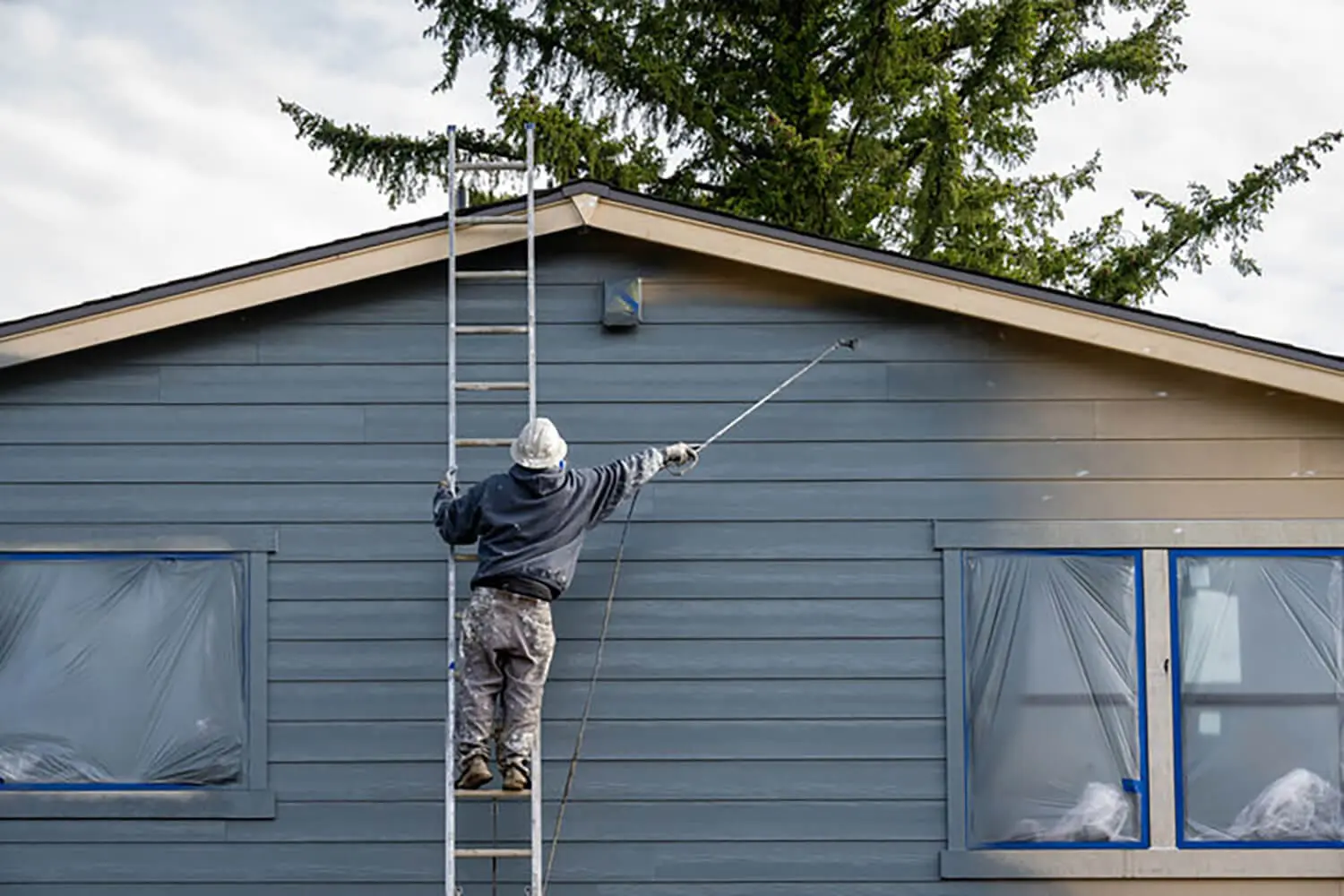
To work around this, painters often follow the shade around a house throughout the day, timing application on each elevation to avoid peak sun exposure. This adds complexity and extends the length of the project.
Spring sun is less intense and the days are shorter. Surfaces heat up more slowly, cool down more predictably, and rarely reach the temperatures that create application problems in summer. The sun exposure dimension clearly favors spring for ease of execution.
Why Spring Is the Easier Season to Book a Painting Crew in Warwick
Both spring and summer fall within the peak exterior painting season in Warwick, so neither offers an effortless scheduling experience. But they are not equally competitive.
Summer is the busiest execution period of the year. Crews that filled their spring calendars are running at full capacity, and homeowners who didn’t book early are competing for whatever slots remain. By July, most contractors serving the Warwick area have limited availability for new projects.
Spring, particularly May and early June, is when the season is just opening. Contractors are active and booking, but the calendar hasn’t filled the way it will by midsummer. Homeowners who reach out in late winter or early spring can usually secure their preferred date.
The important caveat: homeowners targeting a summer start still need to reach out in spring. Waiting until summer to book a summer project almost always means waiting longer than expected for an available slot.
Which Season Is Right for Your Exterior Painting Project in Warwick
Across all four dimensions, late spring into June offers the best overall combination of conditions for exterior painting in Warwick. Daytime temperatures are moderate, overnight lows are reliably above the threshold for curing, humidity hasn’t climbed to its summer peak, sun exposure is manageable, and contractor calendars are still accessible for homeowners who plan ahead.
Summer is not a bad window. It is the most common execution period in Warwick precisely because it works. But it requires more active management of surface temperatures and humidity, and it is the harder season to book into once it arrives.
The other factor worth thinking through is the specific characteristics of the home. A house with significant south or west-facing wall area is going to feel the summer heat problem more acutely than a home with more balanced sun exposure. A home with existing paint that is peeling or showing moisture damage needs prep work before painting can begin, and that prep work takes time — starting in spring builds that time into the schedule rather than compressing it. A homeowner with a flexible timeline who wants to get the project done quickly and isn’t particular about the exact window may find summer scheduling easier to work around than a homeowner who has a specific date in mind.
None of these factors change the overall picture. Late spring into June is the strongest window for most projects in Warwick. But they do affect how much that answer matters for any individual homeowner’s situation.
If you’re trying to figure out which season makes sense for your home specifically, Willow Tree Painting works with Warwick homeowners to evaluate surface conditions and advise on timing. Reach out today to start the conversation.